


As a significant vehicle for traditional Chinese culture and art, the folding screen has become a focal point of interdisciplinary research spanning archaeology, art history, and design studies. Relevant scholarship primarily centers on excavated artifacts, extant imagery, academic theory, and modern design applications.
Physical artifacts provide the foundation for studying the forms, craftsmanship, and functions of ancient folding screens. Key archaeological discoveries include the Western Han painted lacquer screen unearthed in 1972 from Mawangdui Tomb No. 1 in Changsha; it remains one of the earliest and most intact examples discovered to date. The Western Han "Confucius mirror-screen" excavated in 2015 from the Tomb of the Marquis of Haihun was revealed by recent research to be not merely a screen, but a hybrid object combining a dressing mirror with a screen; its panels feature the earliest known depictions and biographical accounts of Confucius and his disciples. The Northern Wei lacquer-painted screen unearthed in 1965 from the tomb of Sima Jinlong in Datong, Shanxi-featuring scenes from the *Biographies of Exemplary Women* (*Lienü Zhuan*) on its front-serves as a crucial artifact for studying the painting art, social life, and Confucian moral education of the Northern and Southern Dynasties period.
Modern academic research has systematically examined the historical and artistic value of folding screens. Art historian Wu Hung has explored the unique significance of screens as both painting media and elements of spatial construction in works such as *The Double Screen: Medium and Representation in Chinese Painting* and the edited volume *The Origin of Painting and Objects: Screens and Paintings in Ancient China*, introducing key concepts such as "painting-within-a-painting" and the "double screen."
Research on folding screens has also extended into the realms of modern design and cross-cultural exchange. Studies in design aesthetics regard the screen's quality of "separating without severing" as a cornerstone of Eastern aesthetics, exploring its philosophical implications and practical applications in contemporary architecture and spatial design. "Coromandel lacquer screens" (incised lacquer screens) produced for export during the Ming and Qing dynasties reached Europe through trade; their decorative motifs showcased traditional Chinese culture-with some pieces even customized to European tastes-serving as vital material evidence of the artistic and commercial exchanges between China and the West during the 17th and 18th centuries.
Research On Folding Screens
Previous
Tips For Selecting A ScreenPopular Products
-
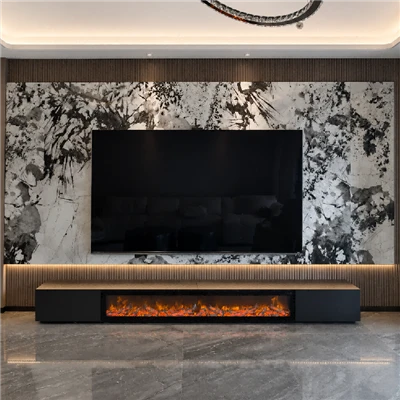
![Electric Fireplace with 3D Flame Effect]() Electric Fireplace with 3D Flame EffectThis decorative electric fireplace combines a realistic flame display with a clean and modern appearance, creating a...read more
Electric Fireplace with 3D Flame EffectThis decorative electric fireplace combines a realistic flame display with a clean and modern appearance, creating a...read more -
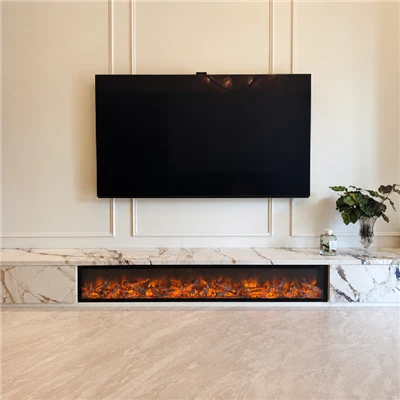
![Vent Free Electric Fireplace Insert]() Vent Free Electric Fireplace InsertThis decorative electric fireplace is created for projects that need visual warmth without the construction demands...read more
Vent Free Electric Fireplace InsertThis decorative electric fireplace is created for projects that need visual warmth without the construction demands...read more -
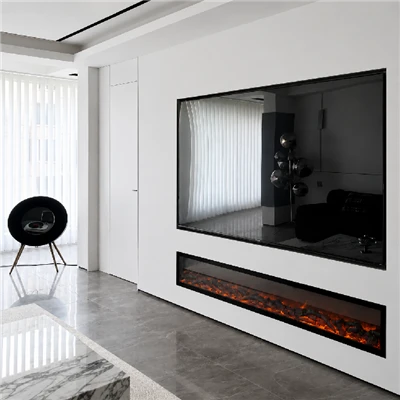
![Smart Home Electric Fireplace]() Smart Home Electric FireplaceDeveloped for apartment upgrades and modern residential renovations, this decorative electric fireplace offers a...read more
Smart Home Electric FireplaceDeveloped for apartment upgrades and modern residential renovations, this decorative electric fireplace offers a...read more -
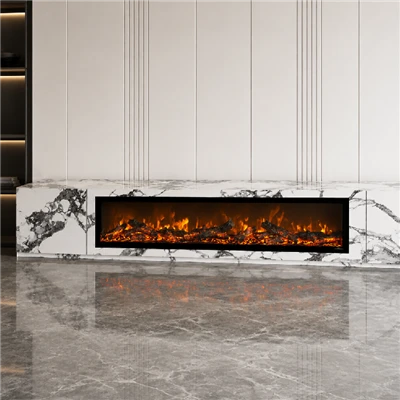
![The Most Realistic Looking Electric Fireplace]() The Most Realistic Looking Electric FireplaceCreated for showrooms and retail display environments, this decorative electric fireplace combines dynamic flame...read more
The Most Realistic Looking Electric FireplaceCreated for showrooms and retail display environments, this decorative electric fireplace combines dynamic flame...read more
Send Inquiry